
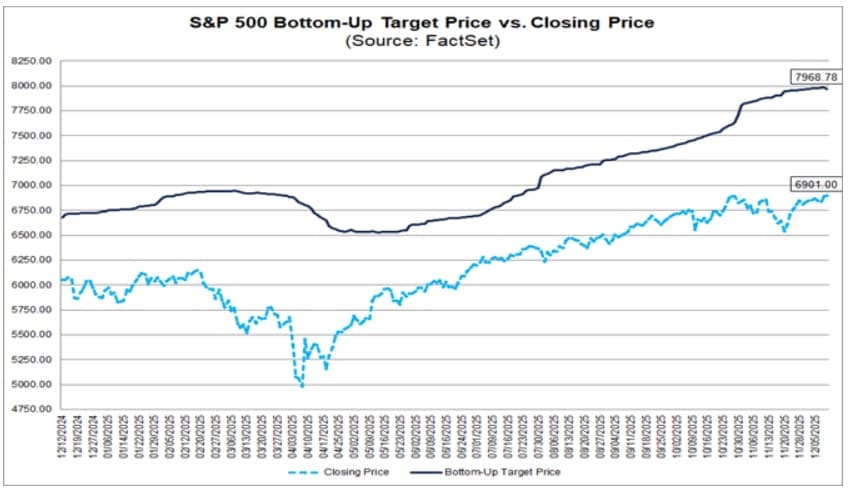
Happy Monday! Santa Claus rally or not to close out this year, analysts are already upbeat about 2026. The S&P 500 is currently hovering at around 6,850, and the aggregate prediction of analysts, according to FactSet data, is that the index will have a closing price of 7,968.78 in 12 months.
The most bullish prediction comes from Deutsche Bank, which expects the S&P 500 to hit 8,000 by the end of 2026. That's a 17% + return compared to Friday's closing price. Year-to-date, the S&P 500 is already up by over 16% in 2025, even though the above-average performance may look dimmed compared to 23.31% in 2024 and 24.23% in 2023.
That said, going forward, all eyes will continue to be on how much of the ongoing optimism surrounding AI translates into real profits. But amidst the non-stop AI rally, if you're looking for undervalued areas to diversify, sectors like energy, real estate, and healthcare are flashing green signals.
The Deep Dive
This week, we are tracking three key stories:
- Is the S&P 500 aiming for "Mount 8K" next year?
- What's wrong with Oracle, and what does it say about the AI boom?
- Undervalued sectors that you should watch out for in 2026.
Let's take a closer look…
1. Is the S&P 500 aiming for "Mount 8K" next year?
No business is as hazardous as trying to predict the stock market, and yet here we are. Analysts expect the stock market's stellar rally to extend into 2026, with forecasts placing the S&P 500's year-end level between a conservative 7,100 and an ambitious 8,000
According to Yahoo Finance, the most conservative call comes from Bank of America, which expects a low-single-digit growth for the index to close 2026 at 7,100. JPMorgan and HSBC are relatively more upbeat, with both forecasting the S&P 500 to close at 7,500. Even higher levels of predictions come from RBC (7,750), Morgan Stanley (7,800), and Deutsche Bank (8,000).
FactSet data shows that the aggregate analyst estimate for the index's closing price in 2026 is 7,968.78. That's a 16.7% upside from Friday's close.
Amidst a general sense of optimism, BofA's sobering outlook is based on what it considers an that may disrupt the market. The bank's estimates are based on the fact that big tech firms are continuing with heavy capex instead of returning cash to shareholders. Going forward, fewer buybacks are expected to happen, and the market's liquidity looks tapped out.
2. What's wrong with Oracle, and what does it say about the AI boom?
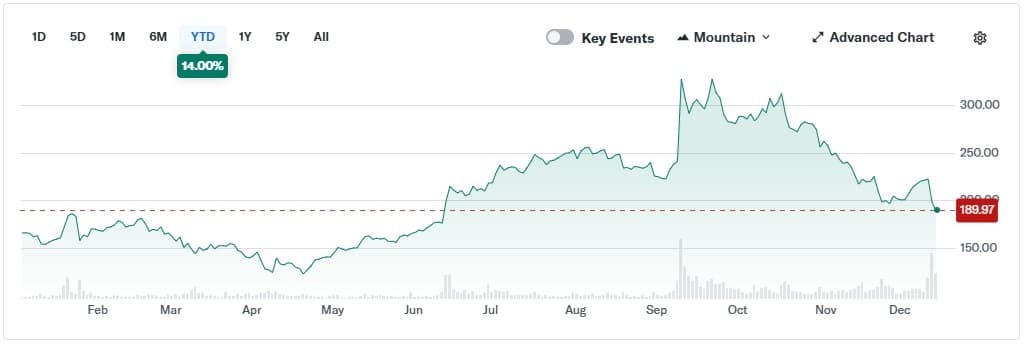
Oracle was down 14% last week as its latest earnings report shows that the company's AI spending is spiraling out of control. The company raised its 2026 capex forecast by another $15 billion, fueling debt concerns
While a larger share of the spending is going to data centers dedicated to OpenAI, with whom Oracle signed a $300 billion deal in September, investors aren't totally convinced about where the money is going to come from. There is speculation that Oracle's massive outlays may be debt-fueled.
On top of that, there are concerns that all is not well with Oracle's data center push. As Bloomberg has reported, the company has already delayed some data center projects to 2028. What does all this say about the near future of the AI boom?
Fortune explains that the current AI boom is faced with two hard limits: physics and debt financing. According to data-center researcher Jonathan Koomey,
Also, a Bank of America analysis shows that the five largest AI hyperscalers - Google, Meta, Amazon, Microsoft, and Oracle - have issued about $121 billion in bonds this year to finance AI data-center expansion, a volume well above historical norms and indicative of a significant shift toward debt-funded infrastructure.
3. Undervalued sectors that you should watch out for in 2026
While mega-cap tech continues to dominate headlines, Morningstar's latest outlook suggests meaningful value still exists elsewhere. Real estate has re-emerged as the most undervalued sector, trading at roughly a 10% discount to fair value.
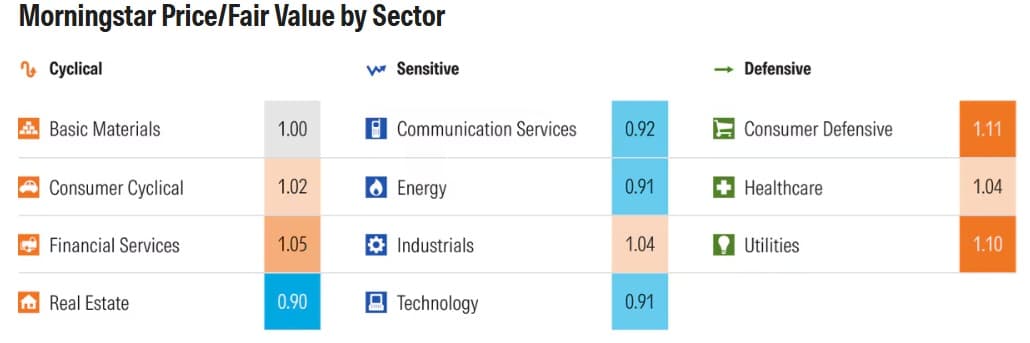
Energy stocks continue to look cheap as supply stays tight and demand holds up, making earnings easier to forecast. Healthcare is also priced below historical norms, even though cash flows remain strong
Small-cap stocks remain another overlooked pocket, trading at a 15%-20% discount to large caps. As enthusiasm clusters around AI leaders, these undervalued areas may benefit if investors rotate away from big tech in 2026.
Before we sign-off
Markets move not just on data, but on how investors interpret them. In each of the stories we cover, it all comes down to market expectations and sentiment. When sentiment runs ahead of fundamentals, what follows is volatility.
At AlphaPro, we track the voice behind the numbers and tone of earnings calls, policy speeches, and analyst commentary. Our Earnings Sentiment Score helps you cut through the noise and see how executives and policymakers are shaping narratives in real time.
Same time next week? See you then.
Want to explore real-time sentiment scores, earnings call insights, and curated stock research?