
Happy Monday! In our last Sentiment Wrap, we said Nvidia's earnings might decide whether the AI story still has steam. The results came strong: in the second quarter, Nvidia reported $1.05 adjusted earnings per share on $46.74 billion of revenue, both of which beat estimates. The stock took a beating, however, falling more than 6% in the last five trading sessions. In case you are wondering why even great results lead to selloffs, our blog post might have a clue.
Overall, as FactSet data suggests, corporate earnings in Q2 were stronger than expected. With over 99% of S&P 500 companies reporting Q2 2025 results, 81% beat both EPS estimates and revenue expectations. Let's now get back to this week, where we shift the spotlight from the individual stocks and earnings to the bigger picture.
The Deep Dive
This week, we are tracking three key events that could shape markets in the days ahead
- "September effect": the month with the market's worst historical track record.
- Investors can't seem to have enough of gold.
- Fresh inflation data this week that could shape the Fed's next move.
Let's take a closer look…
1. The September Effect
September has a market reputation, and that too, not a very flattering one. Since 1896, September has been the worst month for U.S. stocks, with an average negative return of about -1.1%. But no one is really sure why this happens.
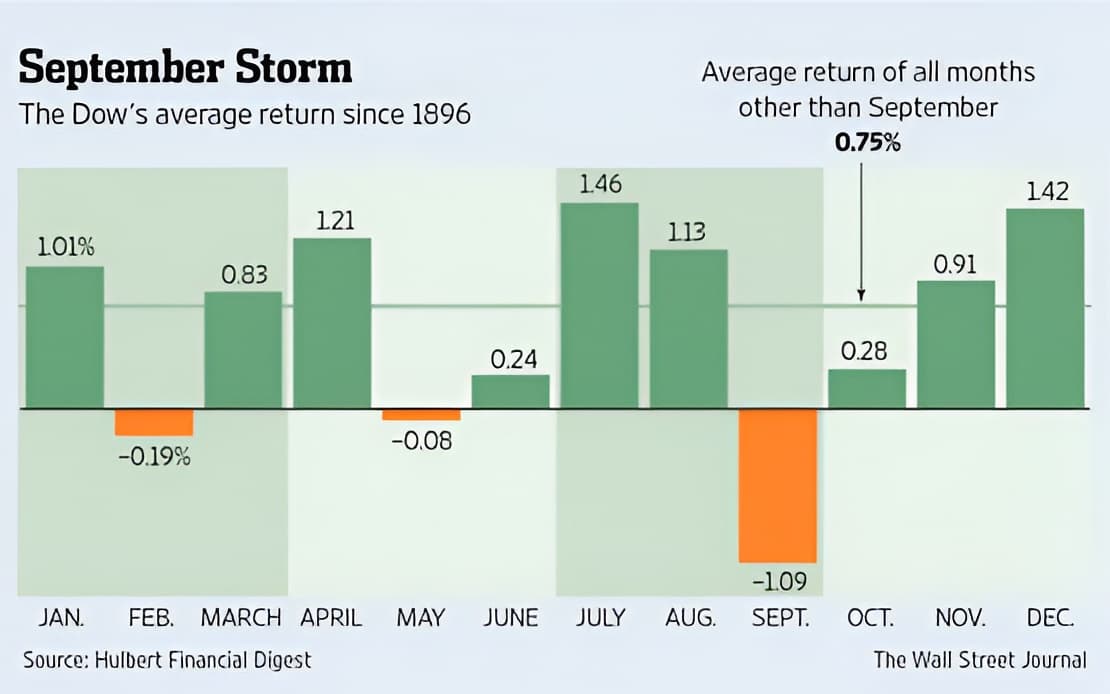
Some experts think that it's because of mutual funds repositioning their holdings after quite summer months, while others blame the drying up of liquidity. As Adam Turnquist at LPL Financial put it, September is when markets leaving behind the sleepy summer and entering a phase of instability. Well, whatever the reason may be, history shows investors tend to approach September with extra caution.
So, in case you are wondering what can spook the market this month, there are a couple of economic data points to watch. First, the U.S. economy added just 22,000 jobs last month versus an expected 75,000, pushing the unemployment rate (4.3%) toward the highest level in 4 years. It also marks a significant slowdown in job growth, with the economy adding only 598,000 jobs in 2025 so far, the weakest performance since the 2009 financial crisis.
All this comes at a time when businesses are already uneasy about tariffs and escalating costs. This week's inflation data might indicate if tariffs are having an impact on consumer price levels. With volatility creeping back, the Dow slipped 0.3% last week, the S&P managed a modest 0.3% gain, while the Nasdaq climbed 1.1%.
2. Gold's Glitter Run Continues
While September generally brings bad news for stocks, the yellow metal's dream run continues. Spot prices went up to $3,596 an ounce last week, which is a record high. One of the triggers was weak U.S. jobs data, which pushed investors toward safe havens. But there's more to gold's consistent price rise than just one data point.
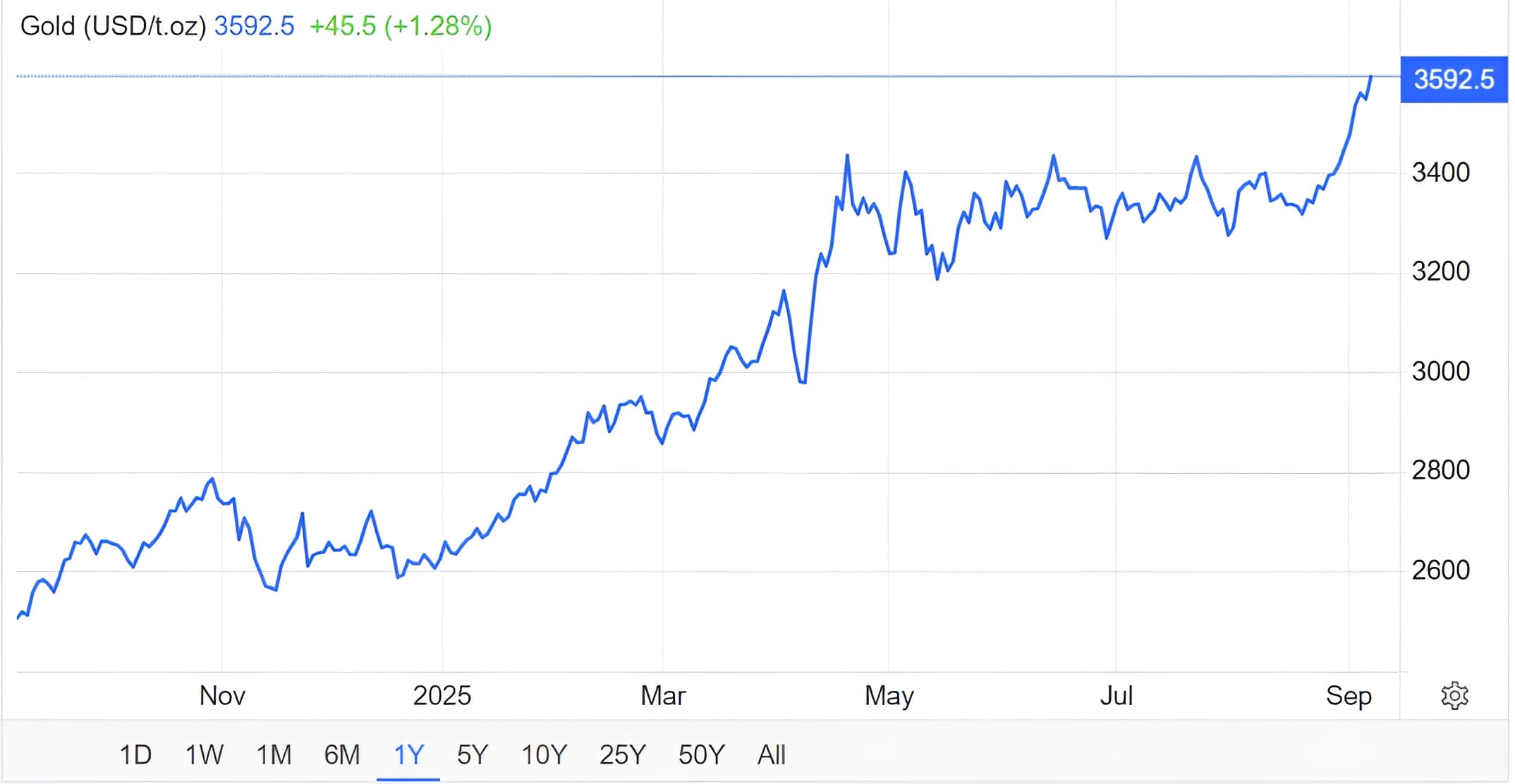
Even though gold was decoupled from the dollar over 50 years ago, it now plays a bigger role than ever in the global economy. Central banks are buying at a historic pace, hedging against sanctions and showing less faith in the dollar as the world's reserve currency. A World Gold Council (WGC) survey in June 2025 revealed that 43% of central banks planned to increase their gold reserves over the next 12 months, and 95% expected total official reserves to continue rising.
Over the last 20 years, gold's returns have nearly kept pace with the S&P 500, making it a surprisingly steady performer. The rise of gold-backed ETFs has also only made it easier for everyday investors to get in. Gold miners and ETFs moved higher last week, hitting marks we haven't seen in over a decade.
3. All Eyes on Inflation Before the Fed Meet
If gold is the rearview mirror showing investor anxiety, the road ahead depends on inflation data. This Thursday's CPI release and Friday's University of Michigan inflation expectations survey are the final big inputs before the Fed meets on September 16-17.
The July CPI showed headline inflation steady at 2.7%, but the core index, which leaves out food and energy, rose 3.1%. Tariff effects are starting to creep in through goods prices.
What is really crucial is how much it gets baked into consumer psychology. Inflation expectations had cooled from April's two-decade peak of 4.4%, but they ticked back up to 3.5% in August. If that trend continues, bond markets and Fed policymakers will find it harder to justify a rate cut. Right now, markets have essentially priced in a 25-basis-point rate cut. That means if Thursday's CPI or Friday's survey comes in hotter than expected, it could trigger a sharp price reaction.
Before we sign-off
Markets move not just on data, but on how investors interpret them. In each of the stories we cover, it all comes down to market expectations and sentiment. When sentiment runs ahead of fundamentals, what follows is volatility.
At AlphaPro, we track the voice behind the numbers and tone of earnings calls, policy speeches, and analyst commentary. Our Earnings Sentiment Score helps you cut through the noise and see how executives and policymakers are shaping narratives in real time.
Same time next week? See you then.
Want to explore real-time sentiment scores, earnings call insights, and curated stock research?